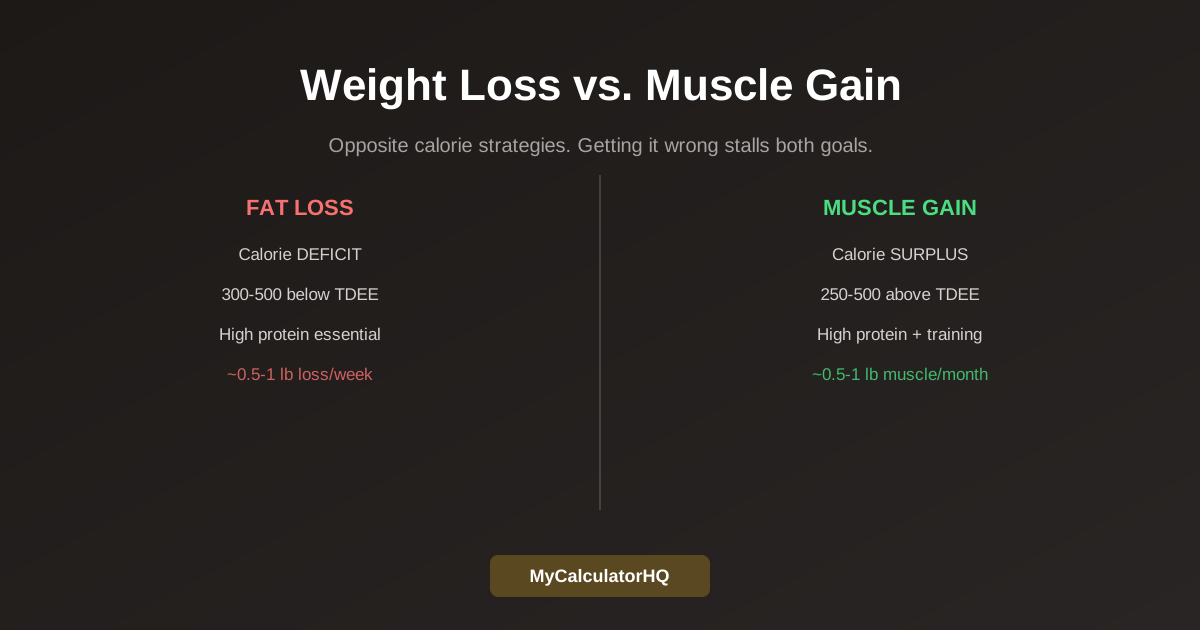
Two people in the same gym have completely different goals — and therefore need completely different diets. The person trying to lose 30 pounds needs a calorie deficit. The person trying to build muscle needs a calorie surplus. Getting this backwards produces poor results from either goal.
Calories for Fat Loss
Fat loss requires a calorie deficit — consuming less than you burn.
The target: 300–500 calories below your TDEE (Total Daily Energy Expenditure)
Example: TDEE = 2,400 calories. Fat loss target = 1,900–2,100 calories/day.
At this deficit, expect 0.5–1 lb of fat loss per week.
Critical addition for fat loss: adequate protein. When in a calorie deficit, your body can break down muscle for energy. Eating 0.7–1g of protein per pound of bodyweight — combined with resistance training — minimizes muscle loss during fat loss.
A 180-pound person in a calorie deficit should eat 126–180g of protein daily. That's about 500–720 calories from protein alone, leaving the rest for fats and carbohydrates.
Calories for Muscle Gain
Muscle growth (hypertrophy) requires both a calorie surplus and progressive resistance training. You cannot build significant muscle in a calorie deficit — you don't have the building materials.
The target: 250–500 calories above your TDEE
Example: TDEE = 2,400 calories. Muscle building target = 2,650–2,900 calories/day.
At this surplus, realistic muscle gain for most adults: 0.5–1 lb of muscle per month. (Yes, per month. Muscle building is slow — which is why "bulking" diets that involve eating 1,000+ extra calories mostly produce fat gain, not muscle.)
Protein for muscle gain: Same target — 0.7–1g per pound of bodyweight. Protein provides the amino acids muscle tissue is made from.
The "Body Recomposition" Middle Ground
Can you lose fat and build muscle simultaneously? In specific circumstances, yes:
- Beginners: People new to resistance training often experience body recomposition in the first 6–12 months
- People returning after a long break: "Muscle memory" enables faster regain
- People with significant excess body fat: The body can use stored fat to fuel muscle building
For experienced trainees at or near their natural muscle potential, simultaneous fat loss and muscle gain is very difficult and very slow. Most find it more efficient to focus on one goal at a time.
The Bulk/Cut Approach
Many experienced fitness enthusiasts use alternating phases:
Bulk (3–6 months): 250–500 calorie surplus + heavy resistance training → build muscle (and some fat)
Cut (2–4 months): 300–500 calorie deficit + continued resistance training → lose fat while preserving muscle
Repeat. Over time, you gain net muscle with manageable fat gain.
This approach works because each phase is optimized for its specific goal rather than compromising between two competing objectives.
Macronutrient Targets by Goal
| Goal | Protein | Carbs | Fat |
|---|---|---|---|
| Fat loss | 0.8–1g/lb BW | Remainder | 0.3–0.4g/lb BW |
| Muscle gain | 0.7–1g/lb BW | Remainder | 0.3–0.5g/lb BW |
| Maintenance | 0.6–0.8g/lb BW | Flexible | Flexible |
Calculate your calorie target for any goal with our Calorie Calculator — set your goal and get your personalized daily numbers.
Common Questions
Frequently Asked Questions
Calculators Mentioned in This Article
Related Articles

BMI Calculator for Men vs. Women: Why the Same Number Means Different Things

How to Lower Your BMI: What Actually Works (And What Doesn't)

BMI by Age: How the Healthy Range Changes as You Get Older
Get calculator tips
Weekly guides. No spam. Free forever.
You're in! Check your inbox.