Calorie counting is the most evidence-backed tool for weight management. It's also the most criticized — and sometimes for good reason.
Done obsessively, it creates anxiety around food, social isolation, and in some people, disordered eating patterns. Done practically, it's simply a tool for awareness that you can eventually put down.
Here's the practical approach.
Why Tracking Works (At Least Initially)
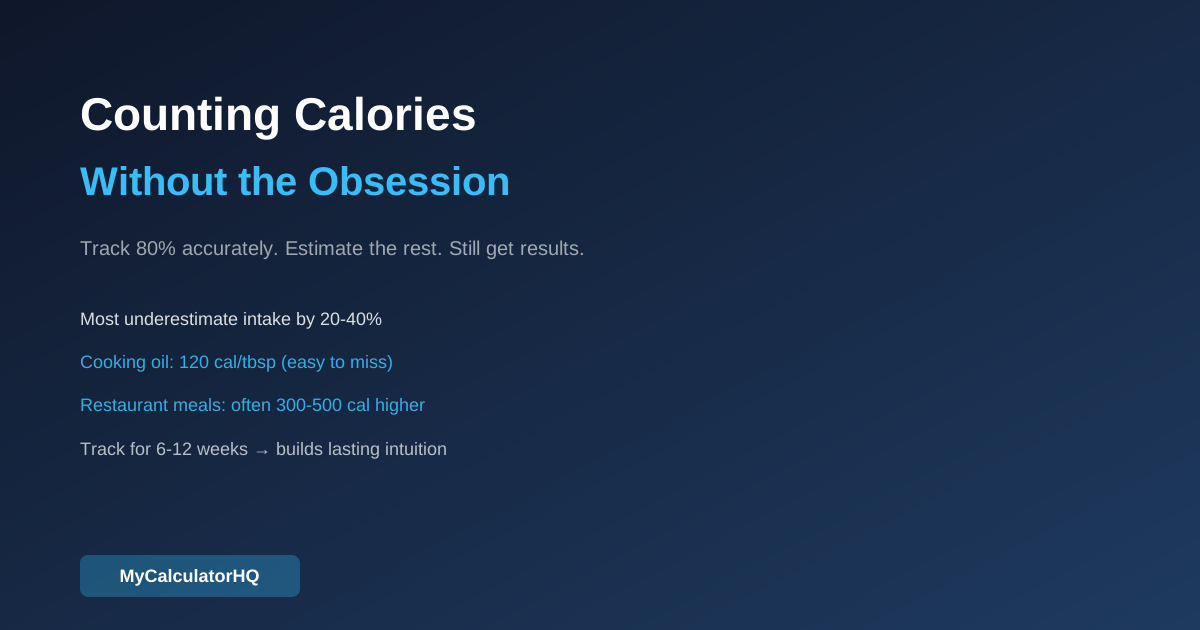
Research consistently shows that people significantly underestimate their calorie intake — often by 20–40%. This isn't moral failure; it's a universal human tendency.
A large muffin feels like a light breakfast. It might be 500 calories. A restaurant pasta dish feels like a normal meal. It might be 1,200 calories.
Tracking, even temporarily, calibrates your intuition. After 6–12 weeks of consistent tracking, many people develop an accurate internal sense of portions that persists even after they stop counting.
The 80/20 Approach to Tracking
You don't need to track every bite to get results. Research suggests that tracking 80% of your food while estimating or ignoring the remaining 20% still produces meaningful results with much less mental overhead.
Practical application:
- Track your main meals (breakfast, lunch, dinner)
- Estimate snacks ("about 200 calories of crackers")
- Don't stress over a splash of milk in coffee or a few almonds
- Log restaurant meals as best you can — use calorie estimates, not perfection
Calorie Density: The Concept That Changes How You Eat
Calorie density = calories per gram of food.
Low calorie density foods let you eat large volumes for few calories — keeping you fuller:
- Cucumber: 16 cal/100g
- Strawberries: 32 cal/100g
- Broccoli: 34 cal/100g
- Chicken breast: 165 cal/100g
High calorie density foods pack many calories into small volumes:
- Almonds: 579 cal/100g
- Olive oil: 884 cal/100g
- Cheddar cheese: 402 cal/100g
- Peanut butter: 588 cal/100g
Understanding this doesn't mean avoiding high-density foods — many are nutritious. It means being aware of portions and balancing high-density foods with high-volume, low-density ones.
The Most Calorie-Dense Foods People Underestimate
These foods are commonly eaten in much larger amounts than people realize:
- Cooking oil: 1 tablespoon = 120 calories. Two pours into a pan is easily 300 calories invisible to most trackers.
- Nuts and nut butters: One "handful" of almonds varies from 100 to 400+ calories depending on what you consider a handful.
- Salad dressing: 2 tablespoons of most dressings = 100–200 calories. Restaurant portions are typically 4–6 tablespoons.
- Alcohol: Often forgotten in tracking. A glass of wine is 120–150 calories; a craft beer can be 200–300.
- Coffee drinks: A large flavored latte can contain 400+ calories — more than a full meal.
When to Stop Tracking
Tracking is a tool, not a permanent lifestyle requirement. Signs you can take a break:
- You consistently hit your targets without much effort
- You can accurately estimate portions without measuring
- Your weight is at goal and stable
Signs tracking has become unhealthy:
- Anxiety about eating foods without known calorie counts
- Avoiding social situations involving food
- Feeling guilty after eating anything "off plan"
If tracking is causing stress rather than empowerment, it's time to step back. A sustainable approach to eating that doesn't involve tracking will always beat a precise but stressful one.
Calculate your daily calorie budget with our Calorie Calculator — then use it as a guide, not a rulebook.
Common Questions
Frequently Asked Questions
Calculators Mentioned in This Article
Related Articles

BMI Calculator for Men vs. Women: Why the Same Number Means Different Things

How to Lower Your BMI: What Actually Works (And What Doesn't)

BMI by Age: How the Healthy Range Changes as You Get Older
Get calculator tips
Weekly guides. No spam. Free forever.
You're in! Check your inbox.