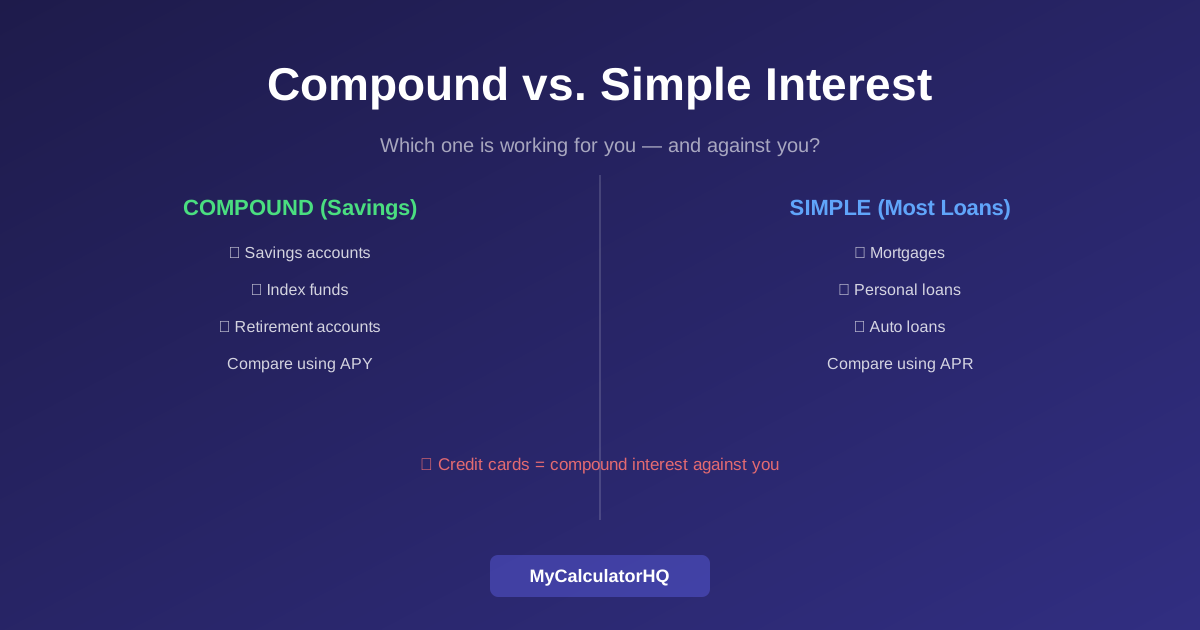
When you open a savings account, take a personal loan, or get a mortgage, interest is being calculated — but not always the same way.
Some products use compound interest. Others use simple interest. And the math works very differently depending on which side of the equation you're on.
A Quick Refresher
Simple interest: Calculated only on the original principal.
Formula: Interest = Principal × Rate × Time
Compound interest: Calculated on principal plus accumulated interest.
Formula: A = P(1 + r/n)^(nt)
The difference seems minor over short periods. Over years, it's enormous.
Savings and Investments: You Want Compound
For money you're accumulating, compound interest is better — because interest earns interest.
Products that use compound interest:
- Savings accounts (interest compounds daily or monthly)
- Money market accounts
- Certificates of deposit (CDs)
- Most investment accounts (dividends reinvested)
- Retirement accounts (401k, IRA) — the underlying investments compound
When comparing savings accounts, the relevant number is APY (Annual Percentage Yield) — not the stated interest rate. APY accounts for compounding frequency and shows your actual annual return.
A savings account with 5.00% interest compounded daily has an APY of 5.13%. That 0.13% difference adds up meaningfully over time.
Loans: Simple Interest Is Usually Better for Borrowers
When you're the borrower, simple interest loans are generally better — you pay interest only on what you actually owe, not on accumulated unpaid interest.
Products typically using simple interest:
- Personal loans (amortized)
- Auto loans
- Mortgages
- Student loans
On an amortized simple interest loan, each payment reduces the principal. Next month's interest is calculated on the lower balance. This is why making extra principal payments saves real money on these loans.
The Dangerous Exception: Compound Interest on Debt
Credit cards and some other revolving debts effectively use compound interest — because unpaid interest gets added to your balance, and next month you're charged interest on that too.
You don't pay off the minimum balance. The remaining interest becomes part of the principal. Interest compounds on interest.
This is why the minimum payment trap is so devastating:
$5,000 credit card balance at 22%:
- Minimum payment only: 27 years to pay off, $6,200+ in interest
- Fixed $200/month: 2.5 years to pay off, $956 in interest
- Fixed $500/month: 11 months to pay off, $227 in interest
Student Loans: Simple, But With a Catch
Federal student loans use simple interest — but during deferment or income-driven repayment when payments don't cover interest, unpaid interest can capitalize (get added to principal).
After capitalization, you're now paying interest on a larger principal. This is the student loan trap: making payments for years and watching the balance barely move or even grow.
The solution: if possible, at least pay the interest that accrues monthly, even while in school or during deferment.
How to Compare Products Accurately
For savings products: compare APY (accounts for compounding).
For loan products: compare APR (accounts for fees and gives a true annual cost).
Never compare a loan's interest rate to a savings account's APY — they're not measuring the same thing. Always compare like to like.
See exactly how compound vs. simple interest plays out with our Compound Interest Calculator.
Common Questions
Frequently Asked Questions
Calculators Mentioned in This Article
Related Articles

How to Pay Off Your Mortgage Faster — 5 Strategies That Actually Work

Personal Loan vs. Credit Card: Which One Should You Use?

Fixed vs. Adjustable Rate Mortgage: Which One Is Right for You?
Get calculator tips
Weekly guides. No spam. Free forever.
You're in! Check your inbox.