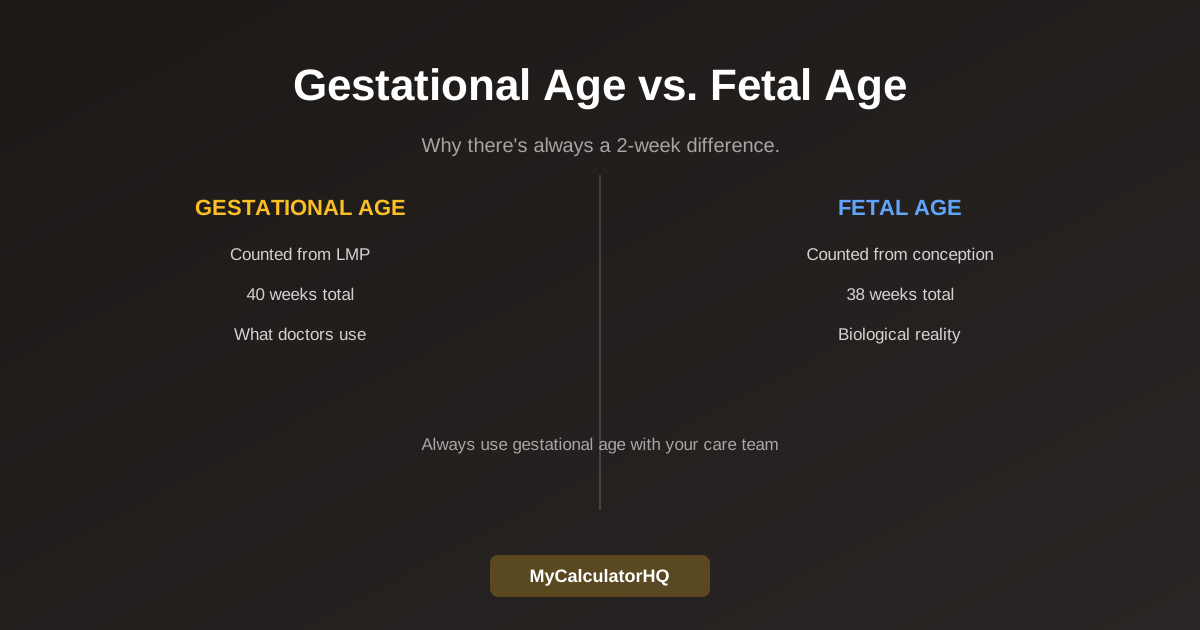
If you're 8 weeks pregnant by your doctor's count, your baby has actually been developing for about 6 weeks. This two-week discrepancy confuses many expectant parents — and it comes from the way pregnancy is officially measured.
Gestational Age: What Doctors Use
Gestational age counts from the first day of your last menstrual period (LMP) — even though conception hadn't happened yet.
Why count from LMP?
- Women know when their last period started
- Ovulation timing is often uncertain
- Conception date is rarely known precisely
- LMP provides a consistent, observable starting point
By gestational age: pregnancy = 40 weeks from LMP
At 40 weeks gestational age, you're at your due date.
Fetal Age: The Biological Reality
Fetal age (also called conceptional age or fertilization age) counts from the estimated date of conception — approximately 2 weeks after LMP in a standard 28-day cycle.
By fetal age: pregnancy = 38 weeks from conception
So when a doctor says "your baby is 20 weeks gestational age," the fetus has actually been developing for approximately 18 weeks since conception.
Why It Matters
The distinction matters in a few contexts:
Developmental milestones: When you read that the heart begins beating "around week 6," that's gestational age — approximately week 4 of fetal development.
Viability: Survival outside the womb becomes possible around 22–24 weeks gestational age (20–22 weeks fetal age). Both measurements are used in different medical contexts.
IVF pregnancies: Because conception timing is known precisely, IVF pregnancies are sometimes tracked in fetal age — which can create confusion when converting to the gestational age used in standard obstetric care.
Ultrasound Measurements
Early ultrasounds measure the embryo/fetus directly and report gestational age. The measurement used (crown-rump length in first trimester, head circumference and femur length later) is compared against standard growth charts to estimate gestational age.
These ultrasound-derived estimates are in gestational weeks — the same scale your doctor uses. You don't need to convert.
The Practical Takeaway
Unless you're doing IVF or have a specific medical reason to track fetal age, gestational age is the number that matters for your prenatal care.
When your doctor says "you're 28 weeks," that's gestational age — 28 weeks from your LMP. Your prenatal appointments, due date, and development milestones all use this scale.
The two-week "extra" at the beginning is simply a convention. Don't try to subtract it — it will only create confusion with your care team.
Calculate your gestational age and pregnancy milestones with our Pregnancy Calculator.
Common Questions
Frequently Asked Questions
Calculators Mentioned in This Article
Related Articles

BMI Calculator for Men vs. Women: Why the Same Number Means Different Things

How to Lower Your BMI: What Actually Works (And What Doesn't)

BMI by Age: How the Healthy Range Changes as You Get Older
Get calculator tips
Weekly guides. No spam. Free forever.
You're in! Check your inbox.