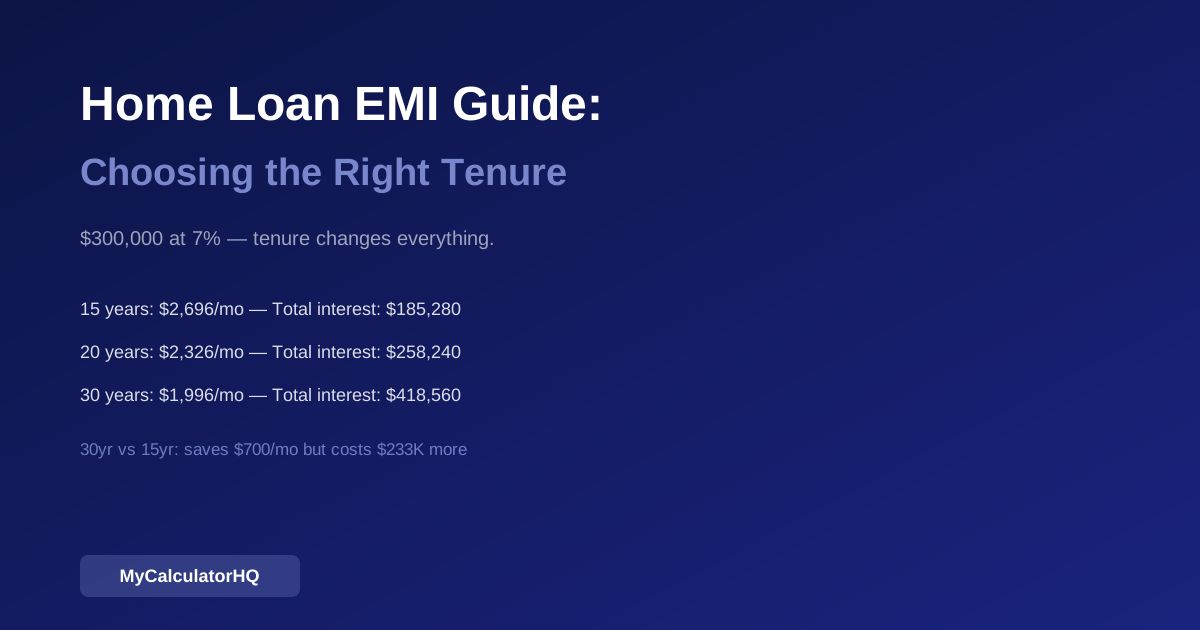
When you take a home loan, your lender will offer you a choice of repayment tenure — often anywhere from 10 to 30 years. The tenure you choose affects your monthly EMI, your total interest cost, and your financial flexibility for decades.
Most people pick whatever tenure makes the EMI affordable. That's understandable — but it's not the complete picture.
How Tenure Affects Your Home Loan EMI
Same $300,000 home loan at 7% interest:
| Tenure | Monthly EMI | Total Interest | Total Paid |
|---|---|---|---|
| 10 years | $3,483 | $117,960 | $417,960 |
| 15 years | $2,696 | $185,280 | $485,280 |
| 20 years | $2,326 | $258,240 | $558,240 |
| 25 years | $2,120 | $336,000 | $636,000 |
| 30 years | $1,996 | $418,560 | $718,560 |
Choosing 30 years over 10 years saves $1,487/month in EMI. But it costs an additional $300,600 in total interest.
Put differently: a 30-year mortgage on a $300,000 home costs you $718,560 total — you pay for the home more than twice over.
The Case for Shorter Tenure
A 15-year mortgage instead of 30-year:
- Costs $700/month more in EMI
- Saves $233,280 in total interest
- Builds equity twice as fast
- Usually comes with a lower interest rate (lenders charge less for shorter terms)
If you can comfortably afford the higher payment, the 15-year mortgage is almost always the better financial decision.
The Case for Longer Tenure
A 30-year mortgage has legitimate advantages:
- Lower required payment preserves cash flow for other goals
- You can invest the difference (if investment returns exceed mortgage rate)
- Provides buffer if income drops temporarily
- You can always pay extra voluntarily — but can't reduce required payments
Many financial planners suggest: take the 30-year mortgage, but pay it like a 15-year. You get the flexibility of lower required payments with the cost savings of faster payoff.
Age Matters When Choosing Tenure
Your age at loan origination should influence tenure choice:
- Age 25: 30-year mortgage ends at 55 — you'll be mortgage-free before typical retirement age
- Age 35: 30-year mortgage ends at 65 — right at retirement. Consider 20–25 years.
- Age 45: 30-year mortgage ends at 75 — you'll be making mortgage payments in retirement. Consider 15 years maximum.
Carrying a mortgage into retirement is manageable if your income is sufficient — but it reduces financial security. Ideally, the mortgage is paid off before your primary income stops.
The Prepayment Strategy
Regardless of the tenure you choose, making extra principal payments accelerates payoff without formal commitment:
- One extra payment per year: reduces a 30-year mortgage to approximately 25 years
- $200 extra per month on a $300,000 loan at 7%: saves approximately $78,000 in interest
If you're unsure whether to choose a 15 or 30-year tenure, take the 30-year and commit to paying an extra amount monthly. You get flexibility without sacrificing the payoff benefits.
Calculate your home loan EMI across different tenures with our EMI Calculator and find the right balance for your situation.
Common Questions
Frequently Asked Questions
Calculators Mentioned in This Article
Related Articles

How to Pay Off Your Mortgage Faster — 5 Strategies That Actually Work

Personal Loan vs. Credit Card: Which One Should You Use?

Fixed vs. Adjustable Rate Mortgage: Which One Is Right for You?
Get calculator tips
Weekly guides. No spam. Free forever.
You're in! Check your inbox.