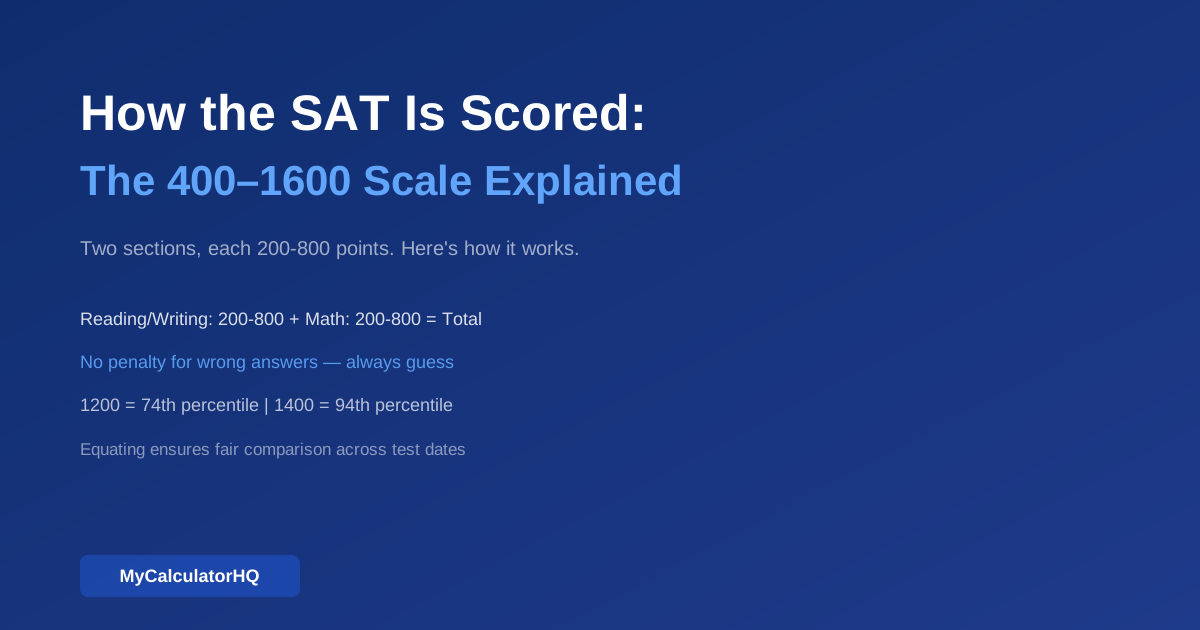
The SAT scores you on a scale of 400–1600. But how does answering questions correctly translate into that final number? The process involves several steps — and understanding it helps you set realistic goals.
The Two Section Scores
The SAT (post-2024 digital format) has two sections:
- Evidence-Based Reading and Writing (ERW): 200–800 points
- Math: 200–800 points
Total score: 400–1600 (sum of both sections)
From Raw Score to Scaled Score
The scoring process has two steps:
Step 1 — Raw score: Count the number of questions you answered correctly. There is no penalty for wrong answers on the current SAT — so guessing is always worthwhile.
Step 2 — Scaled score: Your raw score is converted to a scaled score using a process called equating. This accounts for slight differences in difficulty between test versions.
Equating means a score of 700 on Math means the same level of ability regardless of which test date you took it on — even if one version was slightly harder than another.
Score Percentiles: What Your Score Actually Means
Raw scores and scaled scores tell you how many questions you got right. Percentiles tell you how you compare to other test takers.
| SAT Score | Approximate Percentile |
|---|---|
| 1550–1600 | 99th percentile |
| 1500 | 96th percentile |
| 1400 | 94th percentile |
| 1300 | 87th percentile |
| 1200 | 74th percentile |
| 1100 | 58th percentile |
| 1000 | 40th percentile |
| 900 | 22nd percentile |
| 800 | 9th percentile |
The national average SAT score is approximately 1010–1060. A score above 1200 puts you in the top quarter of test takers.
Subscores and Cross-Test Scores
Beyond the two section scores, the SAT reports:
- Subscores (2–8 scale): Command of Evidence, Words in Context, Expression of Ideas, Standard English Conventions, Heart of Algebra, Problem Solving and Data Analysis, Passport to Advanced Math
- Cross-test scores (10–40 scale): Analysis in History/Social Studies, Analysis in Science
These subscores help identify specific strengths and weaknesses but are rarely used in college admissions decisions — the total score and section scores are what matter.
How Colleges Use SAT Scores
Most colleges report the middle 50% range of admitted students' SAT scores. This means 25% of admitted students scored below that range and 25% scored above.
If a school's middle 50% is 1200–1400, scoring 1350 puts you solidly in range. Scoring 1150 doesn't disqualify you — but it means you're below average for that school and other parts of your application need to be stronger.
Many colleges went test-optional during 2020–2022 and some remain so. Check each school's current policy.
Convert your SAT section scores to a total and see your percentile with our SAT Score Calculator.
Common Questions
Frequently Asked Questions
Calculators Mentioned in This Article
Related Articles
How to Calculate Your GPA: Step-by-Step Guide for High School and College

Weighted vs. Unweighted GPA: What's the Difference and Which Matters More?

How to Raise Your GPA: A Realistic Plan That Actually Works
Get calculator tips
Weekly guides. No spam. Free forever.
You're in! Check your inbox.