Pregnancy apps show you weekly updates about your baby being the size of a lemon or a papaya. But what's actually developing at each stage — and what does that mean for how you're feeling?
Here's a practical week-by-week overview of the major milestones.
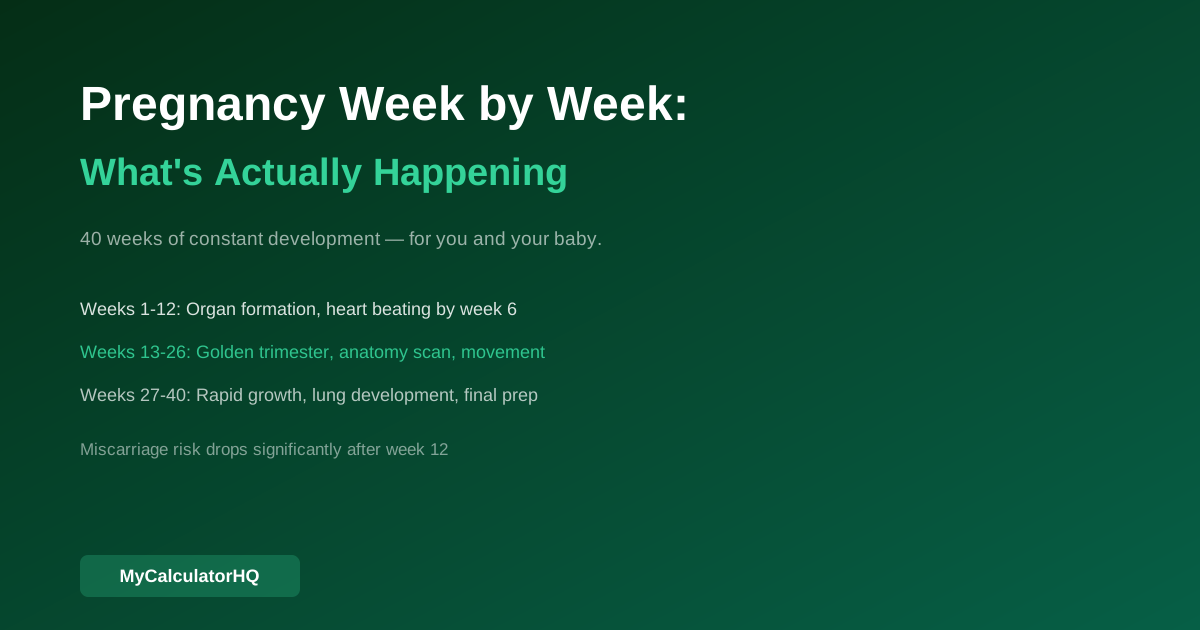
First Trimester: Weeks 1–12
Weeks 1–4: Technically, weeks 1–2 are before conception (counted from LMP). Fertilization occurs around week 2. By week 4, the fertilized egg has implanted in the uterine wall and the embryo is forming. Many women don't know they're pregnant yet — a missed period typically occurs around week 4.
Weeks 5–8: Major organ systems begin forming. The heart starts beating around week 6. By week 8, all major organs are present in basic form. The embryo is about 1 inch long. Morning sickness typically peaks during this period — caused by rapidly rising hCG hormone levels.
Weeks 9–12: The embryo officially becomes a fetus at week 9. Fingers and toes are distinct. Facial features are forming. By week 12, the risk of miscarriage drops significantly — which is why many people wait until the end of the first trimester to announce. The fetus is about 2.5 inches long.
Common first trimester symptoms: nausea, fatigue, breast tenderness, frequent urination, food aversions or cravings, mild cramping.
Second Trimester: Weeks 13–26
Weeks 13–16: Often called the "golden trimester" — nausea usually subsides, energy returns. The fetus develops a unique fingerprint. Gender can often be determined by ultrasound around week 16–20.
Weeks 17–20: The anatomy scan (detailed ultrasound) typically occurs around week 18–20. Baby can hear sounds. Quickening — first fetal movements — is felt between weeks 16–25, usually earlier in second pregnancies. By week 20, you're halfway through.
Weeks 21–26: Baby gains significant weight. Lungs begin developing surfactant (needed for breathing). Viability — the ability to survive outside the womb with intensive medical care — begins around week 22–24. The baby has sleep-wake cycles. Braxton Hicks contractions (practice contractions) may begin.
Common second trimester symptoms: back pain, round ligament pain, visible baby bump, possible heartburn, leg cramps.
Third Trimester: Weeks 27–40
Weeks 27–32: Rapid brain development. Baby opens and closes eyes. By week 32, most babies are in head-down position. Bone marrow takes over blood cell production. Significant weight gain for both baby and mother occurs during this period.
Weeks 33–36: Lungs nearly mature. Baby accumulates fat (needed for temperature regulation after birth). By week 36, baby is considered "late preterm" and has good survival outcomes. Group B strep testing occurs around week 35–37.
Weeks 37–40: "Full term" begins at week 39. Baby continues gaining weight and developing. The immune system receives antibodies through the placenta. Braxton Hicks contractions become more frequent. Cervical changes begin. Most first-time mothers deliver between weeks 39–41.
Common third trimester symptoms: shortness of breath, swelling, frequent urination (again), difficulty sleeping, pelvic pressure.
Key Prenatal Appointments and Tests
| Timing | Appointment/Test |
|---|---|
| Weeks 8–10 | First prenatal visit, blood work, dating ultrasound |
| Weeks 11–13 | First trimester screening (nuchal translucency ultrasound + blood test) |
| Week 16 | Quad screen (optional genetic screening) |
| Weeks 18–20 | Anatomy scan ultrasound |
| Week 24–28 | Glucose tolerance test (gestational diabetes screening) |
| Week 35–37 | Group B strep culture |
| Weeks 36+ | Weekly appointments |
Track your pregnancy week by week with our Pregnancy Calculator — see exactly where you are and what's coming next.
Common Questions
Frequently Asked Questions
Calculators Mentioned in This Article
Related Articles

BMI Calculator for Men vs. Women: Why the Same Number Means Different Things

How to Lower Your BMI: What Actually Works (And What Doesn't)

BMI by Age: How the Healthy Range Changes as You Get Older
Get calculator tips
Weekly guides. No spam. Free forever.
You're in! Check your inbox.