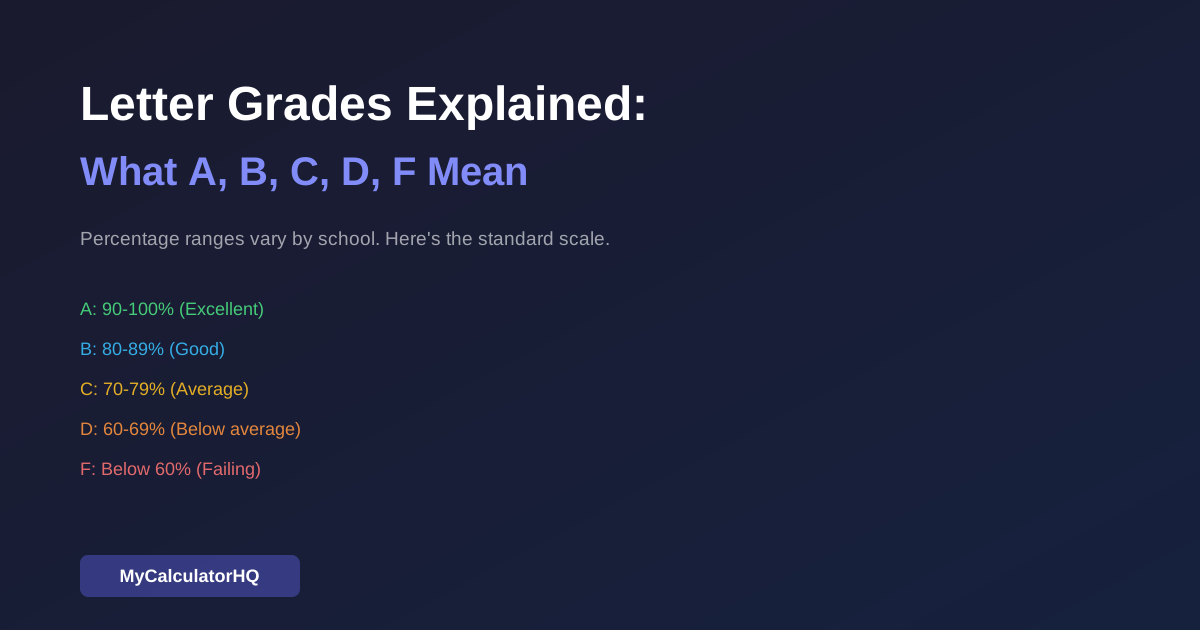
An A is an A, right? Not exactly. The percentage range for an A varies by institution, country, and even individual instructor. And whether a B is "good" depends entirely on what you're trying to achieve.
Standard US Letter Grade Scale
| Letter Grade | Percentage Range | GPA Points |
|---|---|---|
| A+ | 97–100% | 4.0 |
| A | 93–96% | 4.0 |
| A- | 90–92% | 3.7 |
| B+ | 87–89% | 3.3 |
| B | 83–86% | 3.0 |
| B- | 80–82% | 2.7 |
| C+ | 77–79% | 2.3 |
| C | 73–76% | 2.0 |
| C- | 70–72% | 1.7 |
| D+ | 67–69% | 1.3 |
| D | 60–66% | 1.0 |
| F | Below 60% | 0.0 |
This scale is common but not universal. Some institutions use 90–100% for A, others use 92–100%. Some don't use plus/minus grades at all.
How Grade Scales Vary
Some universities use:
- A: 90–100% (more common at larger universities)
- B: 80–89%
- C: 70–79%
- D: 60–69%
- F: Below 60%
Some high schools use:
- A: 93–100%
- B: 85–92%
- C: 76–84%
- D: 68–75%
- F: Below 68%
Always check your specific institution's grading scale — it matters for borderline grades.
What Each Grade Actually Communicates
A (Excellent): Demonstrates thorough mastery of the material. In competitive academic contexts, A grades often indicate top-tier performance.
B (Good/Above Average): Solid understanding with some gaps. In many professional programs (medical, law, MBA), a B average is competitive. In undergraduate contexts, B grades are often the most common.
C (Average/Satisfactory): Basic competency. Meets minimum course requirements. Acceptable for general education requirements but may not satisfy major requirements. Graduate school generally requires B or better.
D (Below Average/Passing): Minimal passing grade in most systems. Often doesn't satisfy major or prerequisite requirements. Many programs require a C or better in required courses.
F (Failing): Does not meet minimum requirements. Course must typically be retaken if required for degree. Significantly damages GPA.
Grade Inflation: Why Context Matters
Average grades at US universities have risen significantly over decades. What was a B average in 1960 might be a C by today's distribution standards at many institutions.
This means grades communicate differently depending on the institution and course:
- A B in a notoriously difficult course may be more impressive than an A in an easy one
- A 3.5 GPA at a highly selective school may represent more achievement than a 3.9 at a less selective one
- Graduate schools and employers increasingly look at the difficulty of courses, not just the grades
Calculate your weighted grade average with our Grade Calculator.
Common Questions
Frequently Asked Questions
Calculators Mentioned in This Article
Related Articles
How to Calculate Your GPA: Step-by-Step Guide for High School and College

Weighted vs. Unweighted GPA: What's the Difference and Which Matters More?

How to Raise Your GPA: A Realistic Plan That Actually Works
Get calculator tips
Weekly guides. No spam. Free forever.
You're in! Check your inbox.