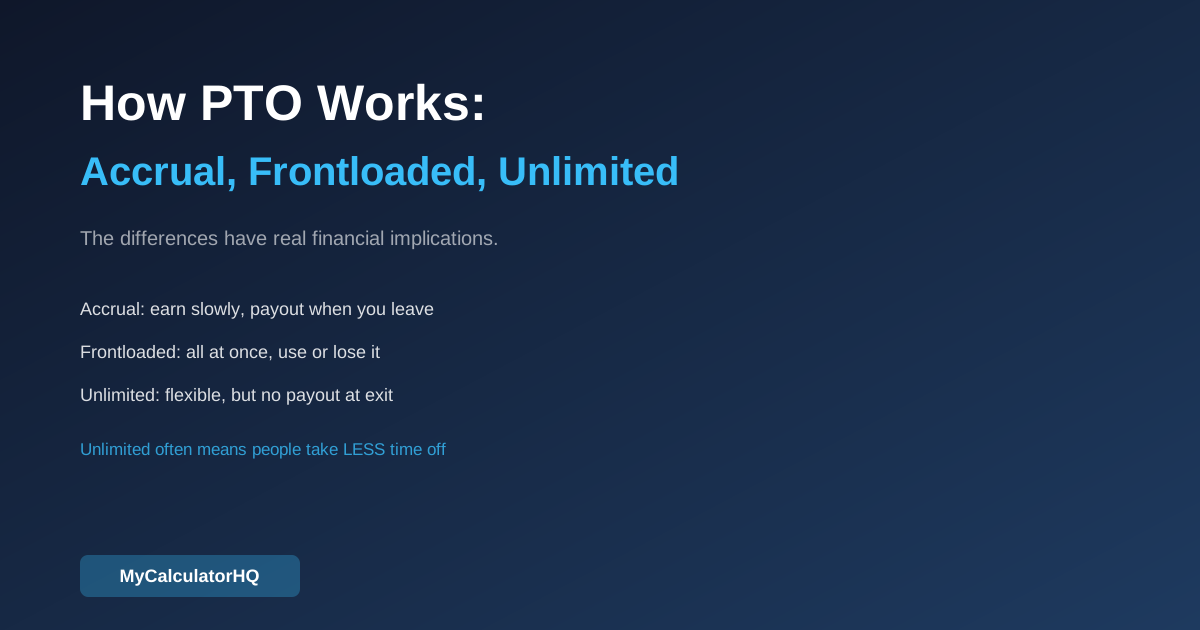
Paid Time Off sounds simple — you get X days, you use them. But PTO policies have become surprisingly complex, and the differences between them affect how much time you can actually take and when.
Here's how each common PTO structure works — and what to look for when evaluating a job offer.
Accrual-Based PTO
The most common structure. You earn PTO gradually over time — typically per pay period or per hour worked.
Example: You get 15 days (120 hours) of PTO per year, paid biweekly (26 pay periods).
Accrual rate: 120 hours ÷ 26 = 4.615 hours per pay period
After 3 months (6 pay periods): 27.7 hours accrued — about 3.5 days available.
Advantages: You always know your balance. Unused time often carries over (up to a cap). If you leave, you typically get paid out for unused accrued PTO.
Disadvantages: Can't take a big vacation in January when you've only been there a month. Some policies have "negative PTO" — you can go into a deficit, but it becomes a debt if you leave.
Frontloaded PTO
You receive your entire annual PTO balance at the start of each year (or on your work anniversary). No waiting — it's all available on day one of the year.
Example: January 1st, you get 15 days in your balance. You can take them all in February if you want.
Advantages: Maximum flexibility. Can take vacation whenever you want during the year.
Disadvantages: Often no carryover — use it or lose it by December 31. If you leave mid-year, you may owe back PTO you've already used but haven't "earned." Some companies prorate for new hires.
Unlimited PTO
Increasingly offered by tech companies and startups. No official PTO bank — you take time off as needed with manager approval.
The reality: Despite sounding generous, unlimited PTO often results in employees taking less time off than those with defined balances.
Why? Without a balance to track, there's no psychological "use it or lose it" pressure. There's also often an implicit cultural pressure not to take too much. And there's no payout when you leave — because there's no accrued balance.
What to ask if offered unlimited PTO: "What was the average number of days people on this team took last year?" If the answer is vague or low (under 10 days), that's a warning sign.
Separate vs. Combined PTO Banks
Older policies separated sick leave from vacation time. Newer policies typically combine them into one PTO bank.
Separate (sick + vacation):
- Example: 10 vacation days + 5 sick days
- Sick days can only be used for illness (sometimes requiring documentation)
- Unused sick days may or may not carry over or pay out
Combined PTO bank:
- Example: 15 days for any purpose
- More flexible — use for vacation, illness, personal days, appointments
- The tradeoff: if you get sick several times, your vacation budget shrinks
PTO Carryover and Caps
Many accrual policies allow carryover of unused PTO into the next year — but usually with a cap.
Example: You can carry over up to 40 hours (5 days) into the new year.
Some states (California, Colorado, others) legally require that accrued PTO carries over and must be paid out upon termination. Others allow "use it or lose it" policies.
Know your state law and company policy — unused PTO can represent significant money. At $35/hour, 80 hours of unused PTO is $2,800.
Calculate the monetary value of your PTO and accrual rate with our PTO Calculator.
Common Questions
Frequently Asked Questions
Calculators Mentioned in This Article
Related Articles

Annual Salary to Hourly, Daily, Weekly: The Complete Conversion Guide

$50,000 vs. $100,000 Salary: What's the Real Difference After Taxes?
Why Your Paycheck Is Always Less Than You Expect — Taxes Explained Simply
Get calculator tips
Weekly guides. No spam. Free forever.
You're in! Check your inbox.