Percentage math seems simple until you're in a real situation where accuracy matters — a business deal, a salary negotiation, a financial decision. These are the most common percentage errors people make.
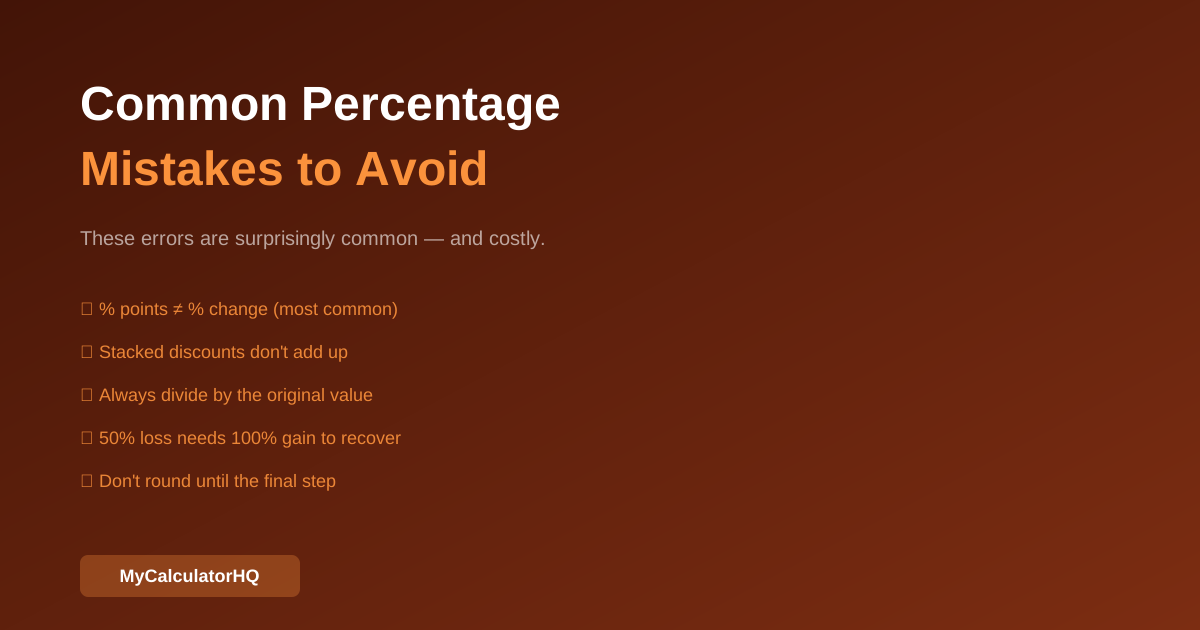
Mistake 1: Confusing Percentage Points with Percentages
This is the most common and most consequential error.
Scenario: Your investment returned 10% last year and 12% this year.
Wrong: "Returns improved by 2%"
Right: "Returns improved by 2 percentage points" (or 20% relative increase)
The "2%" version implies the 10% return increased by 2% of itself (to 10.2%). The "2 percentage points" version correctly states the absolute change from 10% to 12%.
Journalists, politicians, and even financial professionals frequently blur this distinction — sometimes deliberately to make changes seem larger or smaller.
Mistake 2: Adding Percentages That Should Be Multiplied
Two discounts of 25% and 10% do not equal 35% off. They equal approximately 32.5% off.
The correct calculation: multiply the multipliers.
0.75 × 0.90 = 0.675 → 32.5% total discount
This matters for: stacked discounts, tax-on-tax calculations, and compound growth rates.
Mistake 3: Using the Wrong Base
Percentages are always relative to a base number. Using the wrong base gives a wrong answer.
Wrong: Price rose from $80 to $100. "That's a 20% increase" (calculated as 20/100)
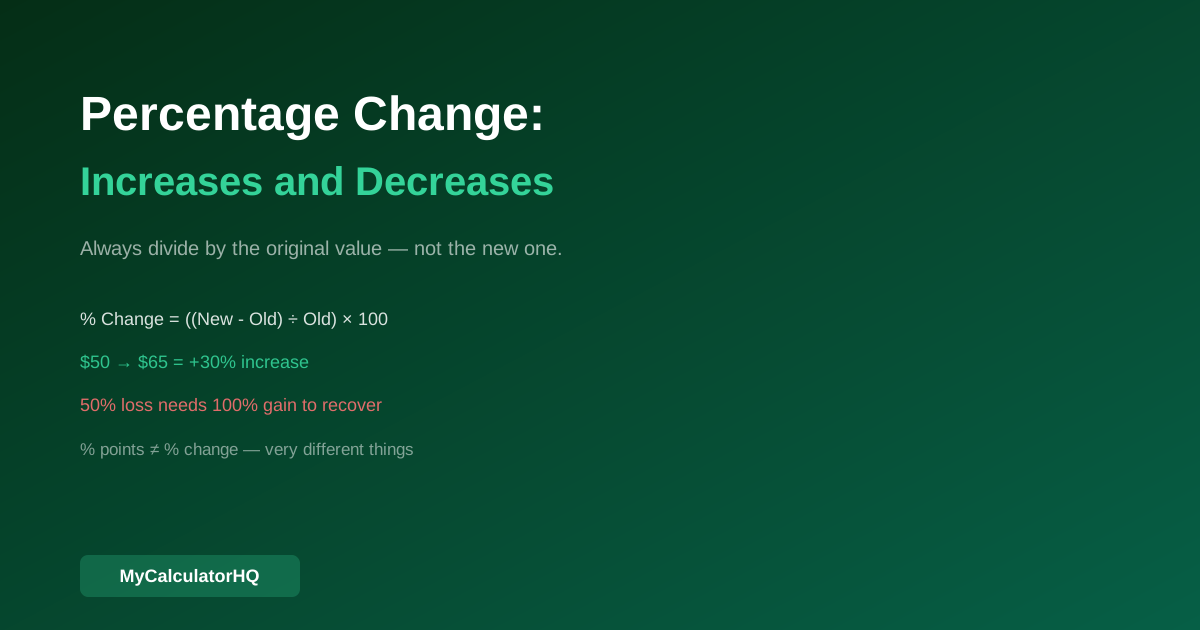
Right: (100-80)/80 × 100 = 25% increase (base is the original $80)
Always ask: "Percent of what?"
Mistake 4: Assuming Symmetry (Loss Recovery)
A 50% loss requires a 100% gain to recover — not another 50% gain.
$100 → lose 50% → $50 → gain 50% → $75
People intuitively assume the same percentage that caused a loss will undo it. It doesn't. Losses always require proportionally larger gains to recover.
Mistake 5: Percentage of a Percentage
Wrong interpretation: "Get 50% off an item already 50% off = free!"
Right: 50% of 50% = 25% of original price. You pay 25%.
$100 item: 50% off = $50. Then 50% off that = $25.
Mistake 6: Rounding Too Early
When doing multi-step percentage calculations, rounding intermediate results introduces errors that compound.
Keep full decimal precision until the final step, then round.
Example: 8.333% × 240 = ?
Wrong: 8.33% × 240 = 19.992 ≈ 20
Right: (1/12) × 240 = exactly 20
Avoid these errors entirely with our Percentage Calculator — accurate results every time.
Common Questions
Frequently Asked Questions
Calculators Mentioned in This Article
Related Articles

Percentages in Finance: Interest Rates, Returns, and Inflation Explained

How to Calculate Discounts, Sales Tax, and Final Price
Percentage Change: How to Calculate Increases, Decreases, and Differences
Get calculator tips
Weekly guides. No spam. Free forever.
You're in! Check your inbox.