Sales are up 23% year-over-year. Your investment lost 12% last quarter. The population grew by 8% over the decade. Percentage change is everywhere — and it's surprisingly easy to calculate incorrectly.
The Percentage Change Formula
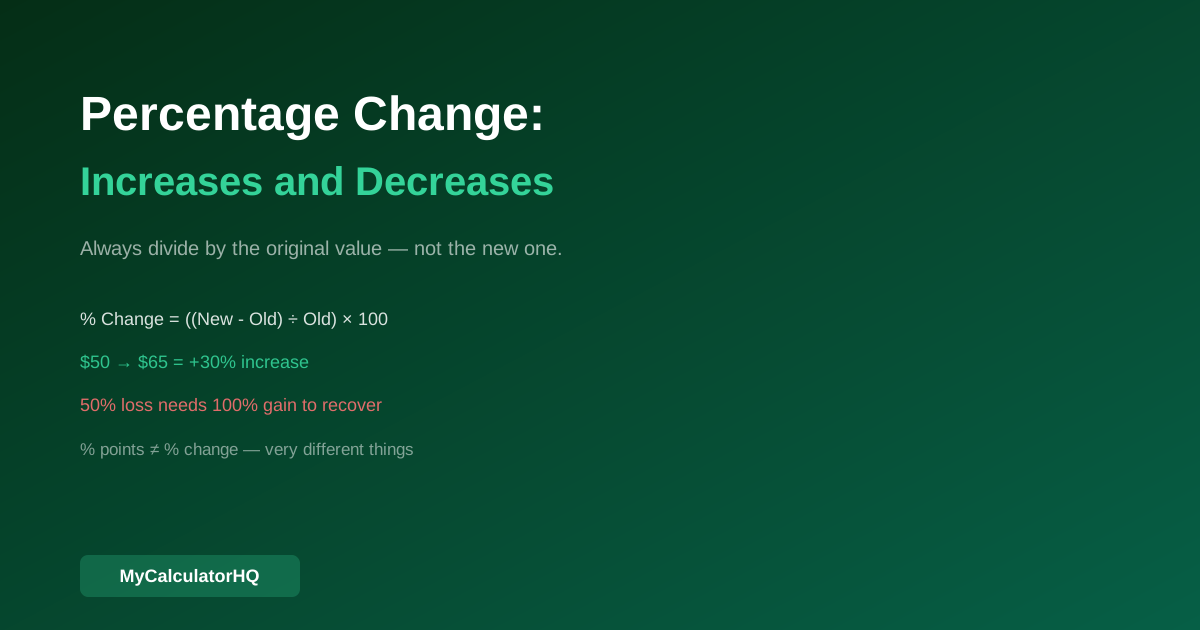
Percentage change = ((New Value - Old Value) ÷ Old Value) × 100
Positive result = increase. Negative result = decrease.
Example 1: Your salary went from $55,000 to $62,000.
= ((62,000 - 55,000) ÷ 55,000) × 100 = (7,000 ÷ 55,000) × 100 = 12.7% increase
Example 2: Stock price fell from $140 to $112.
= ((112 - 140) ÷ 140) × 100 = (-28 ÷ 140) × 100 = -20% (20% decrease)
The Common Mistake: Which Number Is the Base?
The most frequent percentage change error: using the wrong number as the denominator.
Always divide by the original (starting) value — not the new value, not the average.
Wrong: Price changed from $80 to $100. Change = (100-80) ÷ 100 = 20%. Incorrect — used new value as base.
Right: (100-80) ÷ 80 = 25%. Correct — used original value as base.
Asymmetry of Percentage Changes
An important concept many people miss: a 50% decrease followed by a 50% increase does NOT bring you back to the original value.
Start: $100
After 50% decrease: $50
After 50% increase: $75
You're still down 25% from the original.
This is why investment losses require proportionally larger gains to recover:
| Loss | Gain Needed to Recover |
|---|---|
| 10% loss | 11.1% gain needed |
| 20% loss | 25% gain needed |
| 33% loss | 50% gain needed |
| 50% loss | 100% gain needed |
Percentage Point vs. Percentage Change
These are not the same thing — and confusing them leads to significant errors.
Percentage points: Arithmetic difference between two percentages.
Percentage change: Relative change between two percentages.
Example: Interest rate rises from 4% to 6%.
- Percentage point change: 6% - 4% = 2 percentage points
- Percentage change: (6-4) ÷ 4 × 100 = 50% increase
Politicians and media often blur this distinction. When someone says "unemployment rose by 2%," they may mean 2 percentage points (e.g., 5% to 7%) — not that unemployment increased by 2% of itself (which would mean 5% to 5.1%).
Calculate any percentage change with our Percentage Calculator.
Common Questions
Frequently Asked Questions
Calculators Mentioned in This Article
Related Articles

Percentages in Finance: Interest Rates, Returns, and Inflation Explained

How to Calculate Discounts, Sales Tax, and Final Price
Get calculator tips
Weekly guides. No spam. Free forever.
You're in! Check your inbox.